Did a South Korean Study Actually Claim That COVID-19 Vaccines Cause Cancer?
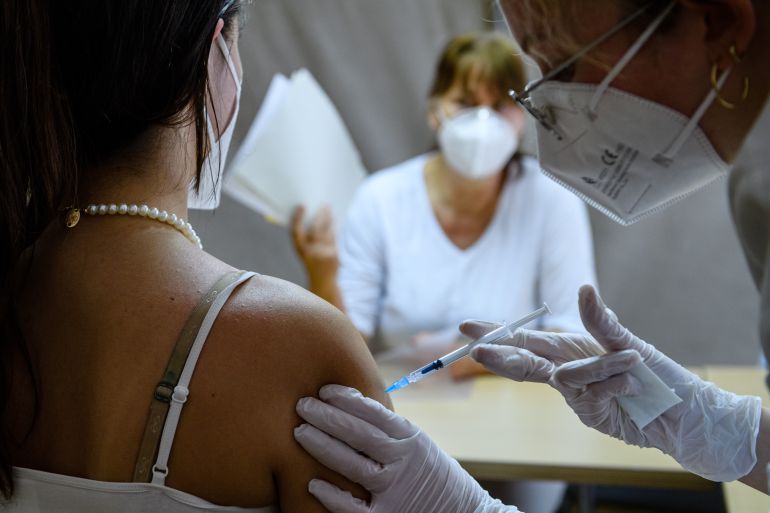
Did a South Korean Study Show COVID-19 Vaccines Cause Cancer? A Closer Look
Recent claims suggesting that a South Korean study “proves” COVID-19 vaccines increase the risk of up to six types of cancer have circulated widely on social media, fueling misinformation. Prominent figures and platforms often leveraged professional credentials to give these claims undue credibility.
Where the Claims Originated
The controversy centers on a study titled “1-year risks of cancers associated with COVID-19 vaccination: a large population-based cohort study in South Korea”, published in Biomarker Research, an open-access journal. Using data from the South Korean health insurance database, researchers observed a statistical correlation: individuals who received the vaccine were more likely to be diagnosed with certain cancers within a year.
However, this correlation was misrepresented as proof of causation. Influencers and organizations highlighted alarming percentages—such as a purported 27% overall increase in cancer risk, 53% rise in lung cancer, and 69% increase in prostate cancer—without scientific justification.
Figures promoting the claim included Nicolas Hulscher, MPH, who falsely asserted vaccines increased the risk of seven types of cancer, and well-known personalities like Peter A. McCullough, MD, PhD, and Dr. Aseem Malhotra, who amplified the narrative online. The anti-vaccine organization Children’s Health Defense also published a report claiming all COVID vaccines increase cancer risk.
What the Study Actually Found
Al Jazeera’s fact-checking unit, Sanad, examined the original study and highlighted a critical omission by those spreading misinformation: the authors repeatedly noted the findings were “epidemiological associations without causal relationship.”
In scientific terms, an epidemiological association indicates a statistical relationship between two variables but does not imply that one causes the other. For example, ice cream sales and drowning incidents both rise in summer, yet ice cream does not cause drowning—the underlying factor is warm weather.
The apparent increase in cancer diagnoses among vaccinated individuals is likely explained by surveillance bias: people who seek vaccination may also attend regular medical check-ups and screenings, leading to earlier detection of cancer rather than vaccines causing it.
The study’s authors themselves stated:
“Given the limited availability of real-world data, our population-based cohort study in Seoul, South Korea suggested epidemiological associations between the cumulative incidence of cancers and COVID-19 vaccination… However, further studies are warranted to elucidate potential causal relationships…”
This clearly shows the study did not claim that vaccines cause cancer, and any suggestion otherwise is a misrepresentation.
Scientific Consensus on COVID-19 Vaccines and Cancer Risk
There is no credible evidence linking COVID-19 vaccines to cancer. Global health authorities and scientific studies have confirmed vaccine safety:
- BMJ experts note that mRNA vaccines are not associated with increased cancer cases.
- The Global Vaccine Data Network (GVDN) states that the idea of a vaccine-induced “cancer epidemic” is biologically implausible, as mRNA vaccines do not contain live viruses nor enter the cell nucleus.
- Fox Chase Cancer Center confirmed mRNA vaccines are safe for patients undergoing active cancer treatment.
- Blood Cancer UK urges patients to continue vaccinations, citing no evidence of elevated cancer risk.
- The U.S. National Cancer Institute also states that COVID-19 vaccines do not cause cancer, nor do they affect cancer recurrence or progression.
COVID vaccines linked to a 27% INCREASE in overall cancer risk, South Korean study finds.
“There’s a one in a thousand chance that this result arose by chance,” Dr. John Campbell noted.@ChildrensHD reports:
The study used data from 2021-2023 for over 8.4 million people in… pic.twitter.com/kDZ56rCV6w
— The Vigilant Fox 🦊 (@VigilantFox) October 6, 2025
🚨COVID-19 “Vaccines” Increase Your Risk of SEVEN Cancer Types
2 Landmark Studies tracked 8.7 MILLION people in Italy and South Korea — comparing vaccinated vs unvaccinated.
Breast, bladder, lung, prostate, thyroid, gastric, and colorectal cancers ALL surged after vaccination. https://t.co/M03HJoUZOu pic.twitter.com/txQF0HRKIY
— Nicolas Hulscher, MPH (@NicHulscher) October 6, 2025
I’m afraid one of Britain’s most eminent oncologists Professor Angus Dalgleish may well be right on the covid ‘vaccines’ fuelling cancer. This study published in a very respected high impact journal is significant and concerning https://t.co/oCc3zmovv1 pic.twitter.com/4fxSQtu7rQ
— Dr Aseem Malhotra (@DrAseemMalhotra) September 28, 2025
Conclusion
The claims circulating online are based on a misinterpretation of a correlation as causation, amplified by misleading social media posts. Both the South Korean study and global medical authorities confirm that COVID-19 vaccines are safe and not linked to cancer. Any assertion that vaccines cause cancer is false and unsupported by scientific evidence.