Cameroon’s Youth Lose Faith as 92-Year-Old President Paul Biya Seeks Another Term
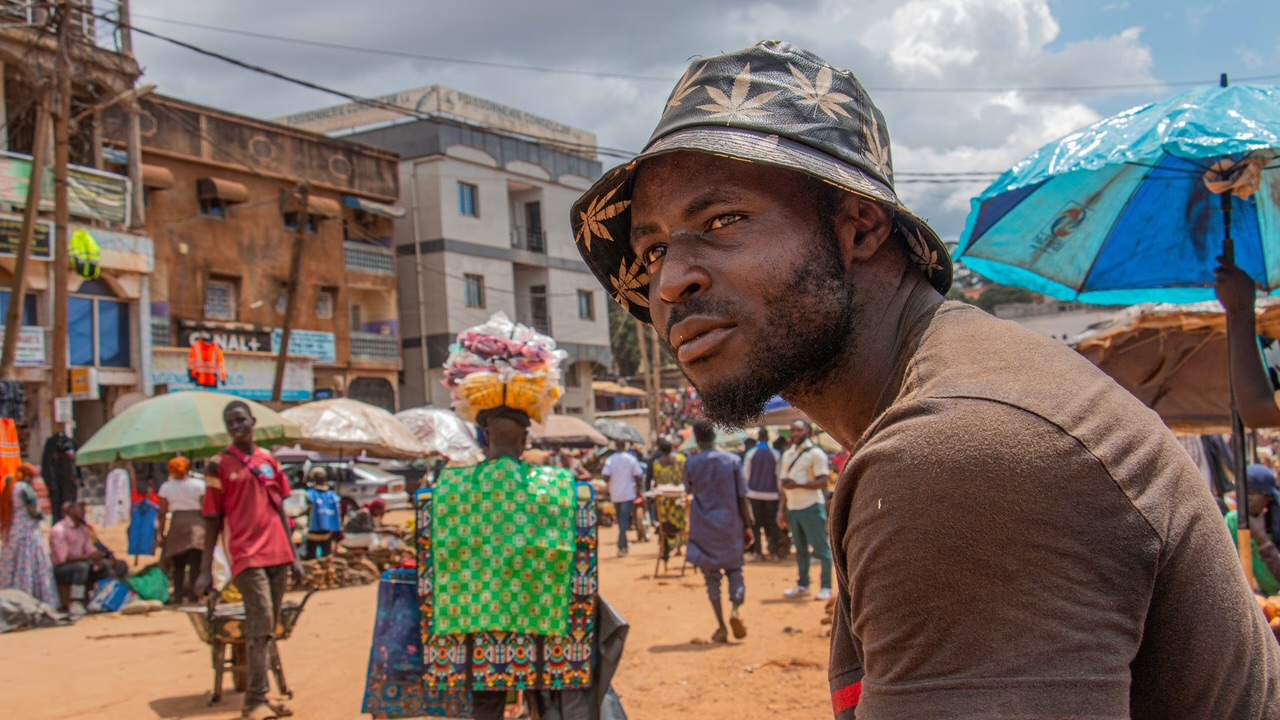
Yaoundé, Cameroon – After being rejected by four vocational schools, Elvis Nghobo, a 34-year-old resident of Yaoundé, decided to abandon his dream of learning a trade and began selling food in a local market. Frustrated and disillusioned, he blames a corrupt education system that, in his words, “only favors the children of the elite.”
As Cameroon heads into its presidential election on Sunday, Nghobo says he won’t be voting. To him, the outcome is already predetermined in favor of President Paul Biya, the 92-year-old leader who has ruled the country for over four decades.
“He’s too old to govern, and it’s exhausting to have known only him as president all my life,” Nghobo told the Associated Press.
A Nation of Youth Led by the Oldest President in the World
Nghobo’s frustration mirrors the sentiments of millions of young Cameroonians. With a median age of just 18, the country’s population represents the vibrancy and ambition of Africa’s youth — yet it remains governed by one of the world’s oldest and longest-serving leaders.
President Paul Biya, who took power in 1982 after the resignation of Ahmadou Ahidjo, is now seeking an eighth term in office. Cameroon has had only two presidents since gaining independence in 1960.
“In these challenging times, I cannot abandon my mission,” Biya declared when announcing his latest candidacy, offering little detail about his plans for the future.
Unemployment, Inequality, and Insecurity
According to the World Bank, Cameroon’s official unemployment rate stands at 3.5%, yet nearly 57% of young adults aged 18 to 35 survive through informal or unstable jobs. Despite being an oil-producing nation with moderate economic growth, many young citizens feel that wealth and opportunities are monopolized by a small political and economic elite.
Beyond economic struggles, Cameroon faces several security challenges:
- In the Anglophone regions, a separatist conflict continues as English-speaking citizens demand autonomy and denounce marginalization by the French-speaking majority.
- In the northern border areas, Boko Haram militants from neighboring Nigeria continue to stage deadly attacks.
A Contested Election and a Weak Opposition
This year’s election features nine opposition candidates, some of whom are former ministers or close allies of Biya. Among them are Issa Tchiroma Bakary, the former Minister of Employment, and Bello Bouba Maigari, once Minister of Tourism.
Notably absent is Maurice Kamto, who secured 14% of the vote in 2018. The electoral commission barred him from running, citing his party’s endorsement of another candidate — a justification his legal team dismissed as politically motivated. Kamto was previously jailed after calling for transparency in the last election.
Political analyst Dr. Wilson Tamfuh of the University of Dschang believes Biya’s opponents are not truly independent:
“Most of these candidates are former ministers who only resigned weeks before the election. Young people see this as hypocrisy — proof that politics here remains driven by self-interest.”
Enduring Power and the “President Until Death” Syndrome
Observers say Biya’s continued dominance is sustained by patronage networks, corruption, and elite loyalty.
“There’s no doubt that Biya is unpopular among ordinary citizens,” said Nat Powell, an Africa analyst at Oxford Analytica. “But he maintains control through powerful alliances with political elites and traditional rulers.”
The Cameroon People’s Democratic Movement (CPDM), Biya’s ruling party, holds an overwhelming majority in parliament — 94 out of 100 Senate seats and 152 of 180 seats in the National Assembly.
Speculation over Biya’s health persists, as he reportedly spends long periods in Europe while delegating governance to loyalists and family members.
“He wants to remain president for life,” Powell added. “His inner circle views him as a stabilizing figure — as long as he stays in power, their interests remain protected.”
Patriotism and the Desire for Change
At the University of Yaoundé I, 27-year-old geoscience student Manoung Wilfried reflected on the election, saying he plans to vote even though no candidate inspires confidence.
“Out of patriotism, I’ll vote,” he said. “But for the good of the country, Biya should hand over power to someone who understands and can solve the problems young people face.”
For others like Elvis Nghobo, hope in the ballot box has long faded.
“Change in this country will not come through elections,” he said, his voice filled with frustration. “The system is built to keep him there forever.”